About Owls
Classification:
Domain: Eukaryota (Organisms with complex cells)
Kingdom: Animalia (Animals)
Phylum: Chordata (Having a hollow dorsal nervecord and flexible skeletal rod)
Sub-Phylum: Vertebrata (Having a backbone)
Class: Aves (Birds)
Order: Strigiformes (Owls)
Owls are a group of mainly nocturnal (active at night) birds classified as belonging
to the order Strigiformes, a group which is most closely related to
nightjars (Caprimulgiformes). The order is divided into two families: Tytonidae or
Barn Owls and related species, and Strigidae or Typical Owls.
Click Here to see a full list of the World's Owls.
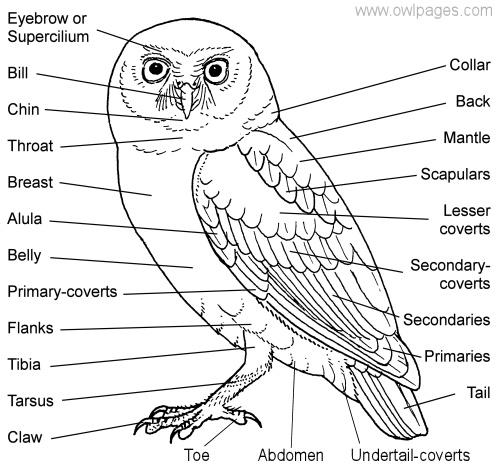
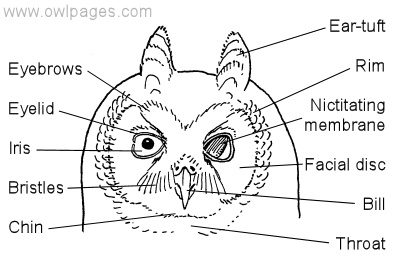
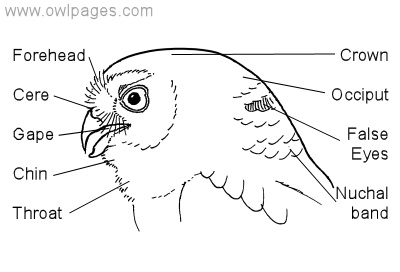
Appearance: A large, round head and huge, forward-facing eyes are features that make an owl instantly recognisable. They also have a sharp, downward-facing beak (or bill), and soft, cryptically coloured plumage. Males and Females are generally similar in appearance, although the female is often up to 25% larger.
Adaptations: Owls are Raptors, or Birds of Prey, which means they
hunt other living things for their food,
using their special adaptations and unique abilities that set them apart from any other creature.
Exceptional vision, and
acute hearing play a major part in an Owl's hunting technique. Couple these with
powerful talons and beak, plus the ability to
fly silently, and you have a formidable predator, using stealth to hunt down prey.
Owl Pellets: After eating, owls regurgitate pellets, which contain the indigestible bones, fur and feathers of their victims. These pellets can be collected by researchers to study owls' eating habits.
Distribution: Owls are found on all continents except Antarctica, and in a great variety of habitats, from thick forests to open prairies.
Size: The smallest owl in the world is the Least Pygmy Owl (Glaucidium minutissimum) at 12cm tall, and the biggest owl in the world is is generally accepted to be the Eurasian Eagle Owl (Bubo bubo) at up to 71cm tall.