
Owl Ears
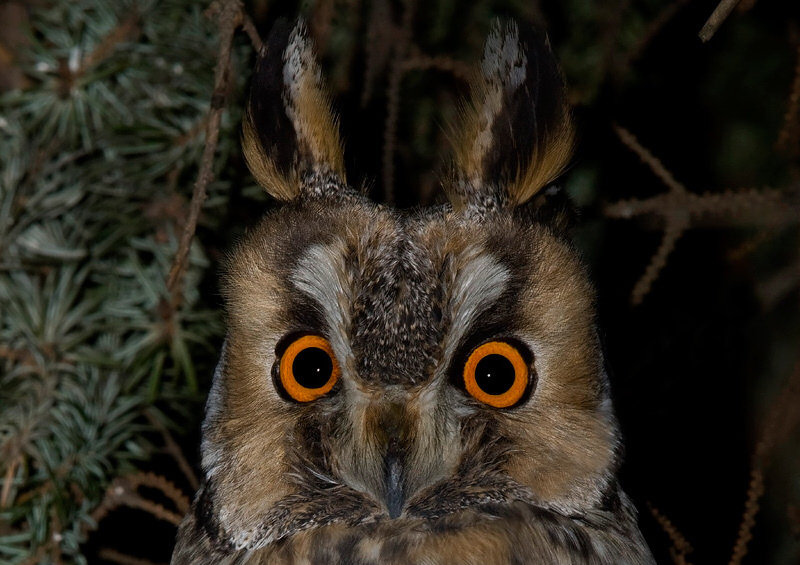
Because Owls are generally active at night, they have a highly developed auditory (hearing) system. The ears are located at the sides of the head, behind the eyes, and are covered by the feathers of the facial disc. The "Ear Tufts" visible on some species are not ears at all, but simply display feathers.
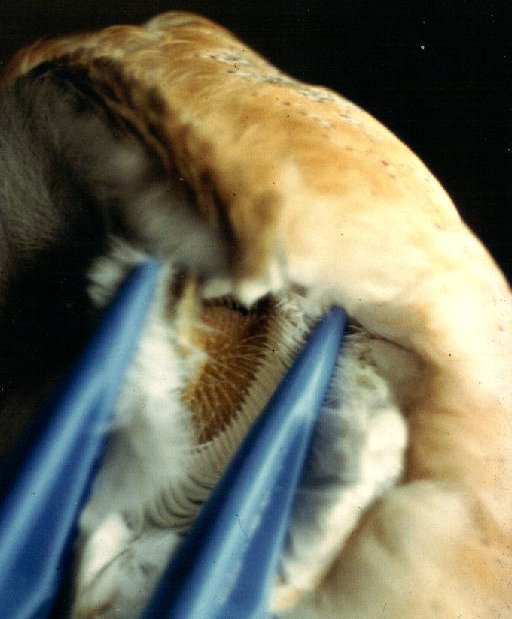
The shape of the ear opening (known as the aperture) depends on the species of Owl - in some species, the opening has a valve, called an operculum covering it . The opening varies from a small, round aperture to an oblong slit with a large operculum. All owls of the family Tytonidae have rounded openings with large opercula, while in Strigidae, the shape of the outer ear is more varied.
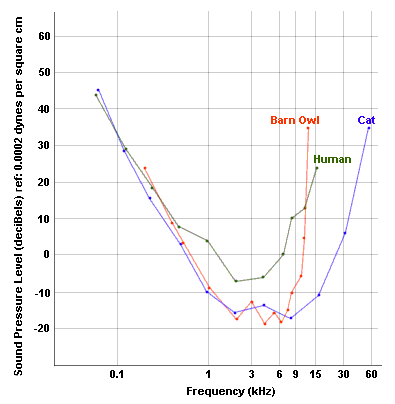
An Owl's range of audible sounds is not unlike that of humans, but an Owl's hearing is much more acute at certain frequencies enabling it to hear even the slightest movement of their prey in leaves or undergrowth.
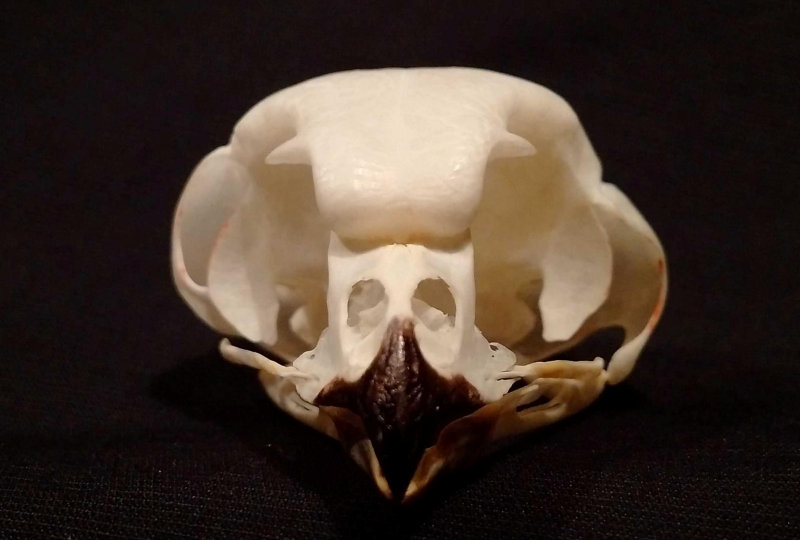
Some Owl species have asymmetrically set ear openings (i.e. one ear is higher than the other) - in particular the strictly nocturnal species, such as the Barn Owl or the Tengmalm's (Boreal) Owl. These species have a very pronounced facial disc, which acts like a "radar dish", guiding sounds into the ear openings. The shape of the disc can be altered at will, using special facial muscles. Also, an Owl's bill is pointed downward, increasing the surface area over which the soundwaves are collected by the facial disc. In 4 species (Ural, Great Grey, Boreal/Tengmalm's & Saw-whet), the ear asymmetry is actually in the temporal parts of the skull, giving it a "lop-sided" appearance.
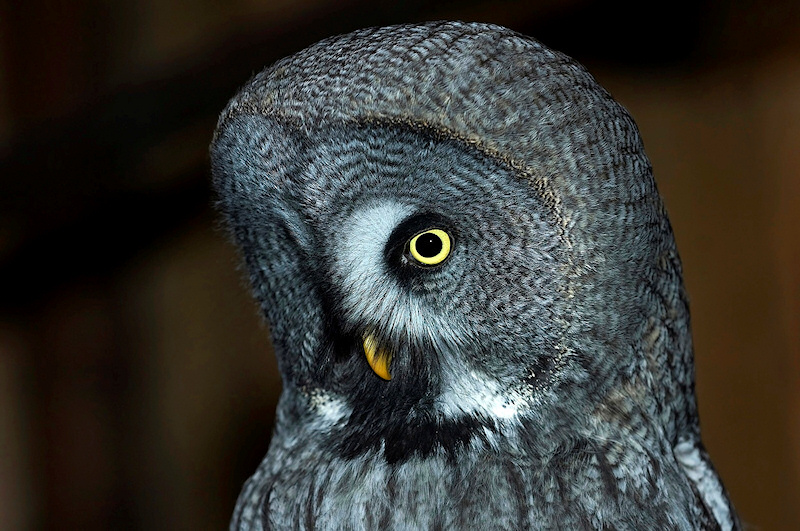
An Owl uses these unique, sensitive ears to locate prey by listening for prey movements through ground cover such as leaves, foliage, or even snow. When a noise is heard, the Owl is able to tell its direction because of the minute time difference in which the sound is perceived in the left and right ear - for example, if the sound was to the left of the Owl, the left ear would hear it before the right ear. The Owl then turns it's head so the sound arrives at both ears simultaneously - then it knows the prey is right in front of it. Owls can detect a left/right time difference of about 0.00003 seconds (30 millionths of a second!)
An Owl can also tell if the sound is higher or lower by using the asymmetrical or uneven Ear openings. In a Barn Owl, the left ear left opening is higher than the right - so a sound coming from below the Owl's line of sight will be louder in the right ear.
The translation of left, right, up and down signals are combined instantly in the Owl's brain, and create a mental image of the space where the sound source is located. Studies of Owl brains have revealed that the medulla (the area in the brain associated with hearing) is much more complex than in other birds. A Barn Owl's medulla is estimated to have at least 95,000 neurons - three times as many as a Crow.
Once the Owl has determined the direction of its next victim, it will fly toward it, keeping its head in line with the direction of the last sound the prey made. If the prey moves, the Owl is able to make corrections mid flight. When about 60 cm from the prey, the Owl will bring its feet forward and spread its talons in an oval pattern, and, just before striking, will thrust its legs out in front of its face and often close its eyes before the kill.


