New chicks are a boost to barn owl numbers
Article Date: 2011-06-11 Source: http://www.sleafordstandard.co.uk
Comments: 0
Lincolnshire, England, U.K. - The owl population along three Lincolnshire rivers has been given a boost, with resident birds hearing the pitter-patter of tiny talon-toed feet.
Staff from the Environment Agency joined forces with the Wildlife Conservation
Partnership last week to carry out checks of 50 owl boxes on the South Forty
Foot Drain, River Glen and Bourne Eau, near Bourne, and the South Forty Foot
Drain, near Sleaford.
The pole-mounted nest boxes were found to be home to 12 breeding pairs of barn
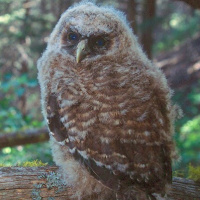
owls and around 40 chicks. A nesting tawny owl with chicks was also found.
All chicks found during the two-day monitoring exercise were removed from the
boxes and fitted with identification rings before being returned. The ringing
was carried out by Alan Ball and Bob Sheppard of the Wildlife Conservation
Partnership as part of a nationwide scheme run by the British Trust for
Ornithology.
Adam Robinson, of the Environment Agency, said: ''The Environment Agency
originally helped to install the boxes and assists with their ongoing monitoring
and support. They were put up to provide additional nesting space for the birds
as their traditional nesting sites in old barns and out-buildings have been
lost.
''It is great to see that these amazing birds are making use of the boxes and we
are delighted to play our part in helping to monitor their numbers.''
Bob Sheppard, Lincolnshire advisor to the WCP, said: ''These nest boxes have
been monitored by the Agency for the past 23 years and hundreds of young barn
owls have been born in these homes on poles.''
Barn owls, with their heart-shaped face, buff-coloured back and wings and white
belly, are found throughout the UK. Their main prey are mice, voles and shrews
and they are often seen hunting along river banks, roads and field margins.
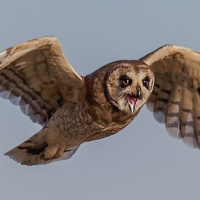
Tawny owls are larger than barn owls and are brown with a ring of dark feathers
around their face. They eat small mammals and rodents, small birds, frogs, fish,
insects and worms. Tawny owls are nocturnal and less likely to be seen hunting
than barn owls.
Disclaimer: This article has been reproduced from http://www.sleafordstandard.co.uk and placed here for comment.
OwlPages.com is not responsible for the accuracy of any information in this article, and does not necessarily agree with the author's opinions.
Related Articles:
2009-01-12 - A real hoot for barn owl figures - Lincolnshire, England, U.K.
< Previous News article | Next News Article >
Comments
Comment on the above News article.
|