Biologist on the lookout to help barn owls
Article Date: 2006-10-02 Source: http://www.timesleader.com
Comments: 0
By Tom Venesky Northumberland County, Pennsylvania, U.S.A. - Nesting sites are being identified as part of trying to reverse declining
numbers.
Kevin Wenner crept around the base of the towering silo and slowly opened the bottom door. He knew the slightest noise would send the silo's inhabitant fleeing out the top.
The old steel door opened a few inches without a sound, until a rusty hinge made a slight squeak.
That was all it took.
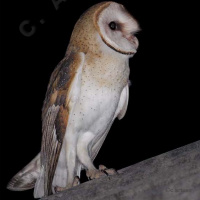
The adult barn owl sprung from a hole on the top of the silo, spreading its
3-foot wingspan to gain altitude. Seeming more perturbed than alarmed at the
human intruders who awoke it from an afternoon nap, the large owl hovered around
the silo several times, its ghostly white plumage contrasting against the blue
sky.
Wenner, who is a wildlife diversity biologist for the Pennsylvania Game
Commission's Northeast region, has spent the past year searching dark corners of
old barns and climbing inside abandoned silos looking for barn owls. Wenner is
identifying nesting sites in the region, hoping to rejuvenate a declining barn
owl population as part of the commission's Barn Owl Conservation Initiative.
Along the way, he has received quite a bit of cooperation from landowners who
appreciate the benefits of having barn owls around. Those benefits could be
found at the base of the abandoned silo in rural Turbotville, which was littered
with pellets containing clues about the barn owl's hunting prowess and large
appetite.
"During the two-month breeding season, it's estimated that a family of barn
owls feeding seven to eight young goes through 3,000 rodents," Wenner said
as he broke open a pellet to reveal several small bones and a mouse's fragile
skull. Mixed in with pellets was a pigeon wing, another abundant food source
around an old farm.
"The farmer that owns this silo is happy to have the owls here, so he's
going to keep the old silo up rather than tear it down."
In June, the old silo was home to a barn owl nest that successfully reared six
young. The nest was one of nine in the northeast region. Wenner suspects there
are more.
"With all the old barns we have in this region, I imagine there's a lot
more nest sites out there. The owls go unnoticed or farmers who have them simply
don't know we're looking for them."
"You look at the components at this site – abandoned silo, old barns, I can
find similar places anywhere in the region."
Barn owls were numerous until the late 1980s, Wenner said. The owl, which has a
flat, monkeylike face, small eyes and hisses instead of hoots, nests in old
barns, silos and tree cavities located near open, grassy areas.
Wenner attributes the owl's decline to a number of factors: old barns being torn
down, grasslands reverting to woods or, worse yet, he said, farmland being
gobbled up by urban sprawl.
About a mile away from the old silo, another barn owl inhabits a silo on John
Pfleegor's farm.
Pfleegor still uses the silo, and each morning when he turns on the unloader,
the owl flies out and perches on a nearby building. When Pfleegor is finished,
the owl returns to the silo.
It's a routine that Pfleegor appreciates, considering the rodents that like to
sneak into his livestock's feed troughs.
"Nobody knew we had them around here until Kevin pointed it out. You hardly
hear them, except for a screaming sound they make at night," Pfleegor said.
"The owl has made a difference in the mice and rats around the barns, and I
hope it stays and gets all it can."
The Turbotville area has at least a third barn owl nest site, according to
Wenner. That one is located in a feed mill less than two miles from Pfleegor's
farm.
While Wenner monitors the existing nest sites and continues searching for new
ones, he is encouraging landowners to get involved. He routinely distributes
barn owl nest boxes to those who own property containing suitable habitat, and
he makes numerous site visits to follow up on any suspected sightings.
He hasn't found any nests in Luzerne County yet, but Wenner has a hunch that
will change in the near future.
"There are places in Luzerne County that are perfect for barn owls – old
barns surrounded by pasture or hayfields. I suspect there's more out there than
we know of."
See a nest? Report a potential barn owl site to Kevin Wenner at 788-8194.
Disclaimer: This article has been reproduced from http://www.timesleader.com and placed here for comment.
OwlPages.com is not responsible for the accuracy of any information in this article, and does not necessarily agree with the author's opinions.
< Previous News article | Next News Article >
Comments
Comment on the above News article.
|