Biologist holes up with owls
Article Date: 2007-03-01 Source: http://www.delawareonline.com
Comments: 0
By Molly Murray Delaware, U.S.A. - For the sleepy screech owl, this clearly was a rude awakening.
There the little night owl was, doing what owls are supposed to do - sleeping
away the day - when along came Wayne C. Lehman, a wildlife biologist and
regional manager for the state Division of Fish & Wildlife.
For more than a decade now, Lehman has made a habit of interrupting daydreaming
owls, plucking them from roosting areas and slapping a metal band on their
ankles - all in the name of science.
The banding program, started in 1993, allows state officials to monitor the
health of the species, Lehman said. The state program is one of a few taking a
closer look at screech-owl populations in the mid-Atlantic. The work is
significant because screech owls aren't well-studied.
Nocturnal birds like nighthawks and owls haven't attracted much attention from
wildlife biologists. As a result, there isn't much information on the size of
populations, the habitats they use or their success in reproducing.
"We just need a whole lot more information on them," said Randy Dettmers,
biologist with the U.S. Fish and Wildlife Service Northeast Field Office.
That's where the banding program comes in.
After 13 years of banding, Lehman has learned that some screech owls are
long-lived. Lehman has encountered birds he banded 10 years earlier.
The research also shows the owls stay close to their roosting box. Lehman once
discovered a banded screech owl that was hit by a car in Kent County, taken to a
rehab center near Newark, released and found two years later back in Kent.
Lehman started his work almost by accident. As a regional wildlife manager, he
had the task of cleaning out wood-duck nesting boxes each winter. The wood ducks
were long gone. But he found that screech owls often used the empty boxes to
roost.
Lehman started attaching small bands to the birds, which allows field
researchers to track the owls and record data each time they are recaptured.
"We're getting really valuable information on their home range [and] life span,"
he said.
On Wednesday, as Lehman opened a plastic wood-duck nesting box at the Little
Creek Wildlife Area, he explained that screech owls are typically docile. But
this one wasn't so sluggish.
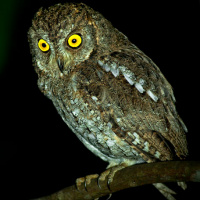
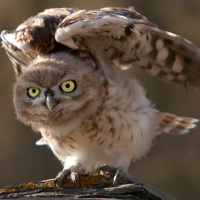
Its yellow eyes grew wide, its wings flapped. The owl turned its head right and
then left and tried to figure out what was up.
The owls use the wood-duck boxes to roost and sometimes nest because natural
roosting places, such as tree hollows, aren't abundant in areas where forests
are used for timber or where trees are removed to make way for development.
Wood ducks and screech owls don't harass one another. If a screech owl wants to
use a wood-duck box that's occupied, the screech owl just moves on, Lehman said.
There are also boxes specially designed for screech owls.
Although their natural habitats are in forests, screech owls do pretty well in
suburban settings, said Paul Green, director of citizen science for the National
Audubon Society.
Because the owls are nocturnal, people might not notice them roosting in
artificial cavities, such as buckets.
Disclaimer: This article has been reproduced from http://www.delawareonline.com and placed here for comment.
OwlPages.com is not responsible for the accuracy of any information in this article, and does not necessarily agree with the author's opinions.
Related Articles:
2007-11-14 - Owl baby boom makes researchers hoot by Molly Murray - Assateague Island, Maryland, U.S.A.
2007-06-08 - Barn owl tracking helps ensure safety of birds by Molly Murray - Delaware, U.S.A.
< Previous News article | Next News Article >
Comments
Comment on the above News article.
|