Subcontractor gives a hoot
Article Date: 2004-07-17 Source: http://www.azcentral.com
Comments: 0
By Michelle Woo Gilbert, Arizona, U.S.A. - Bob Fraley never would have guessed that his discovery last week would
make such a hoot.
While surveying the barren grounds of Higley's soon-to-be-constructed
Gateway Pointe Elementary School, the Valley subcontractor came across a
peculiar sight. There, snuggled together near a fence post, was a family
of burrowing owls sitting in a nest.
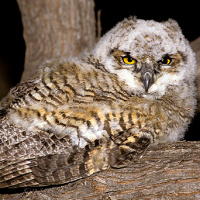
''There was a mom and three babies,'' Fraley said. ''They were about ready
to fly.''
Advising his crew to stay away from the birds, Fraley immediately
notified the general contractor, who then passed the message along to
Mae Johnston of project managing company PinnacleOne.
Action took flight.
The Migratory Bird Treaty Act of 1918 prohibits the killing of migratory
birds for commercial purposes, Johnston said. And though such detection
is rare (burrowing owls are typically burrowed in underground holes),
removal procedures can be extensive.
Johnston typed up a worst-case scenario estimate:
Fish and game permit (required by federal law): $25.
Temporary fence to protect and isolate the nesting area: $1,100.
Bird rescue: $1,200.
Animal care center fees: $900.
Possible subcontractor remobilization costs: $1,500.
And she made sure to include, saving burrowing owls from being homeless
in the summer: Priceless.
"The bottom line is that a wildlife habitat will be destroyed if we
don't act on this," said Johnston, who oversees all construction
projects in the Higley Unified School District.
The five-school district plans to build one school per year to keep up
with the growth in southeast Gilbert.
The district will later submit a request for funding from the Arizona
Schools Facilities Board.
The burrowing owl, or athene cunicularia, is not classified as an
endangered species but as a "species of special concern." Often
described as "short, fat owls on stilts," they are commonly found in
Arizona where land is flat and open.
Burrowing owl habitat specialist Greg Clark said that less than 1
percent of the owl's natural population remains because of the rapid
influx of housing developments. The challenge, he said, is figuring out
how to stabilize the existing population and finding ways for burrowing
owls to co-exist with humans.
A year ago, about 90 burrowing owls had to be relocated to a safe
habitat after they were discovered living in underground holes near the
South Treatment Plant construction site in Gilbert. Some now nest in the
town's Riparian Preserve.
"Instead of waiting for the bird to get on the endangered species list,
we need to intervene early and get them out of harm's way," said Clark,
who works with Wild at Heart, a wildlife rehabilitation group based in
Cave Creek.
Disclaimer: This article has been reproduced from http://www.azcentral.com and placed here for comment.
OwlPages.com is not responsible for the accuracy of any information in this article, and does not necessarily agree with the author's opinions.
Related Articles:
2004-07-17 - Work on school halted by owls by Tracy Kurtinitis - Gilbert, Arizona, U.S.A.
< Previous News article | Next News Article >
Comments
Comment on the above News article.
|